Towards the end of each year, the junior fellows of the Gutenberg Academy Fellows Program | GAFP go on a study trip for three days to a place of study – an experience of education, arts, and culture. At the end of the study trip, the junior fellows report on their experiences in the form of text and pictures. You can find them here.
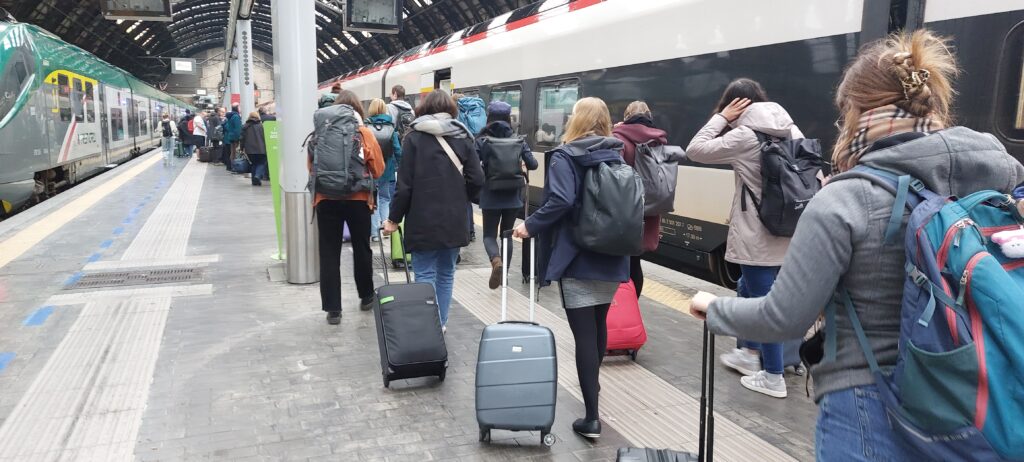
This year’s study trip took 14 junior fellows of the Gutenberg Academy Fellows Program to Milan from October 3rd to 6th – the capital of Lombardy and one of Italy’s largest cities of arts and culture with over 1.3 million inhabitants. Milan is Giuseppe Verdi’s city, Leonardo da Vinci’s place of work, an opera and fashion metropolis and – with a total of seven universities – not least an educational center and student city, making it a promising destination for a study trip. All of the junior fellows on the trip had worked together to create a program that would do justice to the various facets of Milan as well as the different interests of the participants, and thus, enable everyone to have an interesting and informative stay. The arrival by train on October 3rd not only offered a beautiful Alpine panorama, but also plenty of time for dialogue amongst the doctoral candidates, which continued after the arrival at the joint dinner. A night-time view of the cathedral and the Galleria Vittorio Emmanuele II created the perfect atmosphere for our time in Milan.
The first official item on the program began on Friday morning: a visit to the Museo nazionale della scienza e della tecnologia Leonardo da Vinci. The museum, which is located in a former monastery, offers an impressive collection of exhibits documenting the historical development of science and technology in Italy and worldwide, for example, in the fields of energy production, the steel industry, telecommunications, transportation, and space travel. Particularly fascinating was the exhibition on Leonardo da Vinci himself, which gave us deep insight into his innovative ideas and scientific findings, especially his studies on the construction of the dome of Florence Cathedral, human anatomy and the ideal city, as well as his inventions of various machines, such as his famous flying machines and a spinning machine long before “Spinning Jenny” and the Industrial Revolution. As Mainz residents, we were, of course, particularly pleased that “Magonza,” the city where the printing press was invented, was also honored in the exhibition.
Invigorated by pizza, pasta, panini, and, of course, a caffè or two, the group visited the political and social sciences school of the Università degli Studi di Milano Statale, or La Statale, for short, in the early afternoon. With over 60,000 students, it is not only the largest public university in Milan, but in the whole of northern Italy. Giulia Sbaraini Fontes, a visiting researcher from Brazil and aPostdoctoral Fellow at the Department of Social and Political Sciences, introduced us to past and current research projects in the field of Political Communication – including a newly designed study on disinformation and media trust among young adults in Italy. Inspired by these insights, the panel took up the discussion of the previous GAFP round table on trust in media and science against the background of virulent disinformation in a conversation with the speaker. At the same time, we learned a lot about the Italian and Brazilian media systems, the role and challenges of journalists under populist governments, and gender inequality in journalism in an intercultural exchange. The discussion was also framed by a critical examination of the different structures of the science system in Italy, Brazil, and Germany, which, in turn, raised questions about the importance of science communication.
A third highlight of the day was an early evening visit to the Pinacoteca di Brera in the elegant artists’ and nightlife district with the same name. Equipped with audio guides, we independently explored the impressive collection of mainly Northern Italian painting, particularly from the Renaissance and Baroque periods, which is exhibited in the rooms of the magnificent Baroque palace, including works by Bellini, Caravaggio, Filippini, Raphael, Mantegna, and Hayez. The impressions of the day were exchanged and specialized over dinner and ice cream in the lively evening Brera. The wonderful performances by two junior fellows on the piano in the trattoria delighted not only the group but also the other guests.
Saturday began with a very enthusiastic guided tour of the city by our tour guide Marco, who introduced us to the history of Milan from Diocletian through the heyday of the Visconti and Sforza families to the present day. We learned about Milan’s pioneering achievements in the field of healthcare in the Middle Ages, the function of its canals, the almost 600-year history of the construction of Milan Cathedral, the importance of the Galleria Vittorio Emmanuele II for the young Italian nation, Milan as a business location (and the Milanese origin of the word bankrupt), and the origins of the famous Milan opera house, the Teatro alla Scala.
We extended these insights during the subsequent visit to the cathedral and a guided tour of La Scala: Here we not only learned about the history of the building and its architectural features, found out about Toscanini’s, Verdi’s, and Puccini’s connections to Milan opera, and were allowed to sit in the boxes of the magnificent auditorium, but we were also even able to listen to a rehearsal of Strauss’ Rosenkavalier for the new season. The day was rounded off with shopping and/or an aperitif in the Castello Sforzesco park and finally with dinner together in the picturesque Navigli canal district, which is particularly popular amongst students.
Finally, on Sunday, the return journey to Mainz offered a few complications, but also the opportunity to review the impressions of this varied and inspiring trip together. Many thanks to the Gutenberg Academy Fellows Program | GAFP for making this shared experience possible, and to everyone who contributed to the organization and design of this thoroughly successful study trip.
This year, the Gutenberg Academy Fellows Program study trip took 14 junior fellows to the capital of Austria from October 6th-9th, 2023. With around two million inhabitants, Vienna is not only the second largest city in the German-speaking world, but also an architectural eye-catcher in the tradition of the Congress of Vienna as a diplomatic city and with a variety of historical buildings in a wide range of styles.
Science and education are very important in Vienna: 15 universities and higher education institutions offer a wide range of courses and are home to numerous research projects. All 14 fellows played an active role in shaping the travel program, helping to ensure that we were able to gain exciting and informative insights into city life, culture, politics, and science, despite our short stay in Vienna. We also learned a lot about the Austrian academic system through discourse with other doctoral students on site.
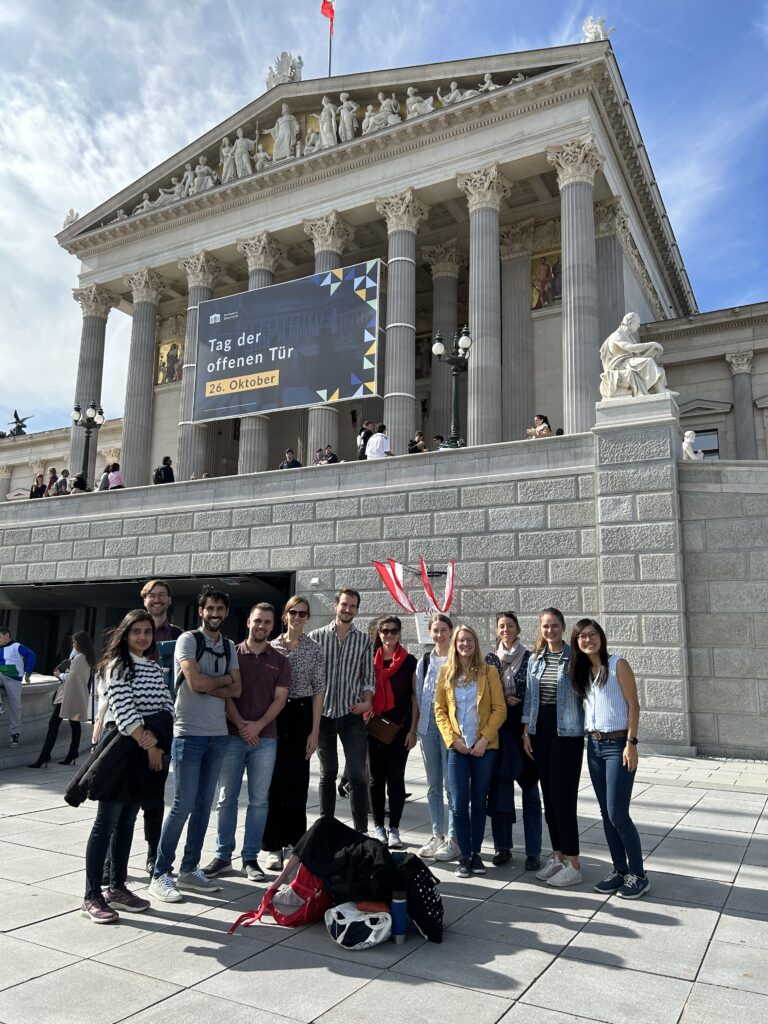
We were unable to attend the exchange with Attila Halasz from the Central European University (CEU) planned for Friday afternoon due to a considerable delay in our train connection. We wanted to find out more about the CEU and its teaching and research activities, especially against the background of the ousting of the CEU from Budapest and the restriction of academic freedom by the Hungarian government. The Saturday tour program started with a guided tour of the Austrian Parliament. Our tour guide, who is active in democracy education, not only explained the development and political system of the Austrian Republic, both of which have numerous parallels to the Federal Republic of Germany, but also introduced us to the special architectural features of the parliament building.
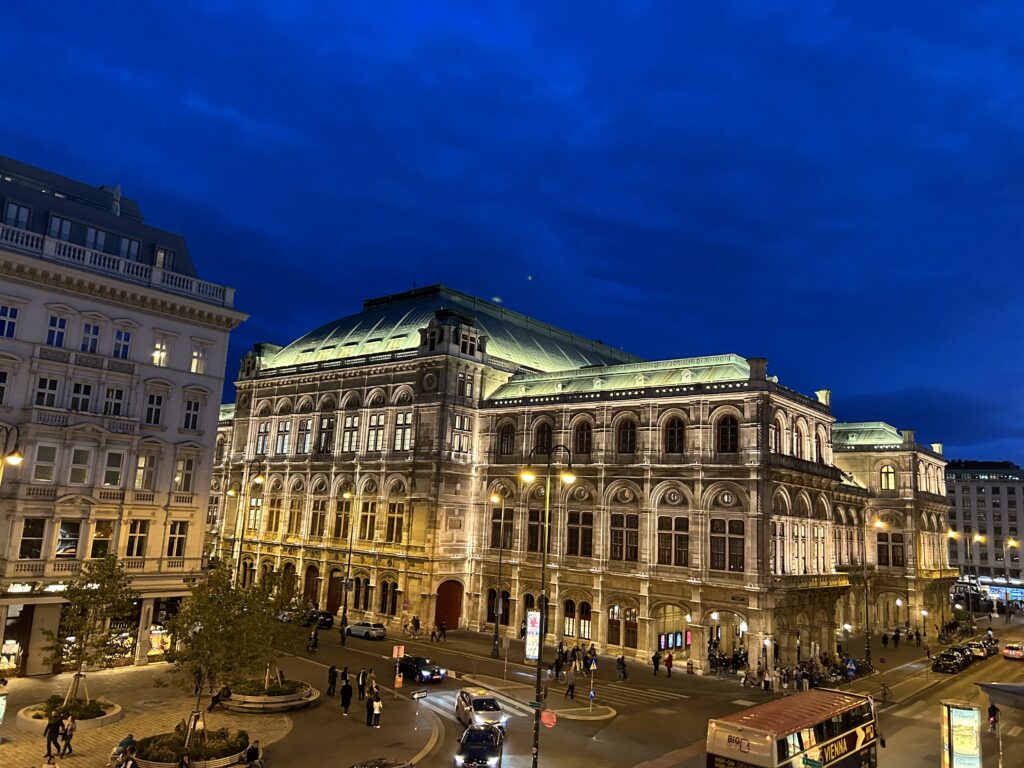
In the afternoon, the group went on a self-organized city tour along the famous Ringstrasse: Following in the footsteps of Otto Wagner, Vienna’s famous city planner, we started at the Austrian Postal Savings Bank in Art Nouveau style. Via the Museum of Applied Arts, which some of us also visited late in the evening during the Long Night of Museums, we went to Café Prückel, a traditional Viennese coffee house, where the group not only enjoyed a real Viennese Melange or an americano, but also learned more about Viennese coffee house culture in a self-designed quiz. In the nearby Stadtpark, we then discovered the first musical traces of famous Viennese composers such as Johann Strauss, to whom a monument is dedicated there. We were able to see for ourselves why the gilded bronze statue is one of the most photographed monuments in Vienna. We continued along the Ringstrasse past the palace of Archduke Ludwig Viktor, via the “Albertina modern” museum to the Vienna State Opera, which was to be one of our destinations on Sunday. Via the Burggarten and the Maria Theresa Monument, dedicated to the first female Habsburg regent, our tour ended at the Parliament, which we had already visited. In the evening, we stopped off at a traditional Viennese restaurant, the Esterházystüberl, to gain strength for the upcoming long night of Museums. Divided into small groups, we visited classic arts museums such as the Albertina or the Kunsthistorisches Museum, the Museum of Applied Arts, the Natural History Museum, small exhibitions on the world’s largest collection of globes, for example, or admired butterflies in the tropical house and black holes in the planetarium. All these diverse impressions were still a topic of conversation at breakfast on Sunday morning.
After breakfast, our group set off with renewed energy to the Vienna State Opera, one of the most famous and productive opera houses in the world and a major landmark of the city. A guided tour of the impressive building not only gave us a glimpse behind the scenes of Vienna’s famous stage, but we also learned numerous details about the history of the building and the operation of this cultural jewel. After the tour, we went our separate ways: some decided to visit the Albertina, which they had missed during the Long Night of Museums. Others made their way to the Gaming Museum, where they immersed themselves in the history of computer and arcade games, or visited the campus of the University of Vienna, which impressed with its mix of historical and modern architecture. In the evening, half of the group gathered in a cozy restaurant serving traditional Austrian delicacies and then headed to Vienna’s Prater, the traditional amusement park. The other half of the group decided to attend Giacomo Puccini’s opera “Tosca” at the State Opera in the evening. After these eventful hours, we met up again, exchanged our impressions and ended the day together in an Irish pub.
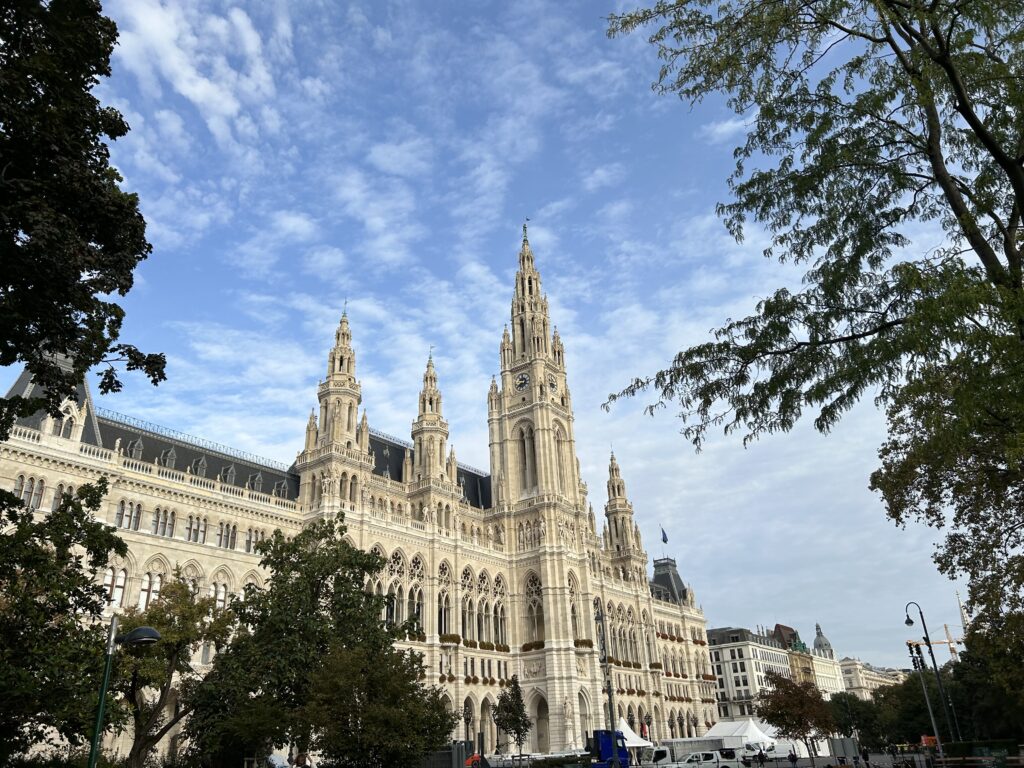
On Monday morning, we visited the town hall. This historic building, which was built between 1872 and 1883 in the neo-Gothic style, is impressive with its 98-meter-high main tower and its well-preserved rooms. During the tour, we learned a lot about the city’s history and the associated civic self-image, the municipal and regional political procedures as well as current developments in Vienna. Impressive event rooms in the City Hall, including the ballroom and the public courtyard, emphasized the close connection between the citizens and the city administration. Vienna’s urban development, including social housing and climate adaptation, could serve as a model for other cities. City Hall itself is a symbol of Viennese democracy and has a long history of political debate that ultimately led to Vienna’s status as one of the most livable cities in the world. The visit therefore offered us exciting insights into Vienna’s past, present, and future.
Before the return journey, a visit to a university institution was on the agenda – the University of Music and Performing Arts Vienna (mdw). The Music Education Institute is based in the Akademietheater, where we were welcomed by university assistant Benedikt Plößnig. After a guided tour of the library and the institute’s premises, we visited the exil.arte exhibition, where the musical works of refugee composers, including Arnold Schönberg and Ernst Toch, could be experienced acoustically in the form of audio samples and visually with the help of biographical panels. After a short coffee break in a local Viennese café, where the counseling sessions for doctoral candidates usually take place, we got to see the main building of the University of Music and Performing Arts Vienna as part of a campus tour.
Inspired by numerous impressions, we would like to thank all fellows of the Gutenberg Academy Fellows Program who supported us with the organization and thus made this wonderful experience possible!
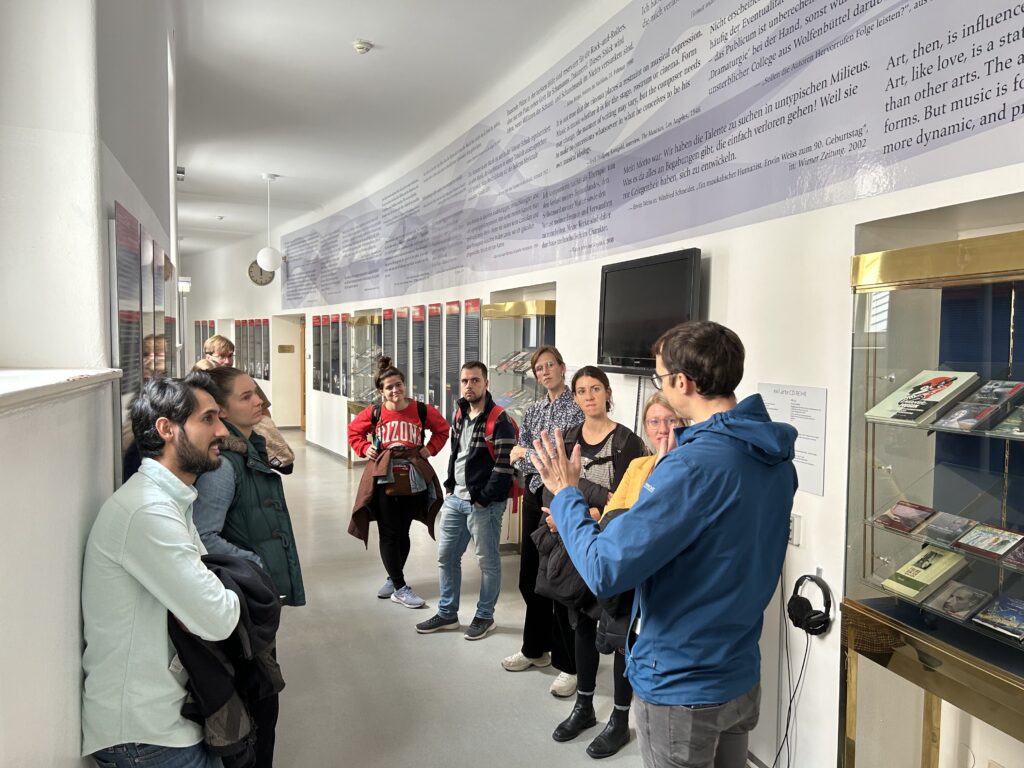
This year’s study trip, which took place from October 7th-10th, 2022, took 12 junior fellows to the Scandinavian city of Copenhagen. The travel program was actively organized by all fellows in order to benefit as much as possible from the cultural offerings of the city and to enable discussions with other doctoral candidates on site.
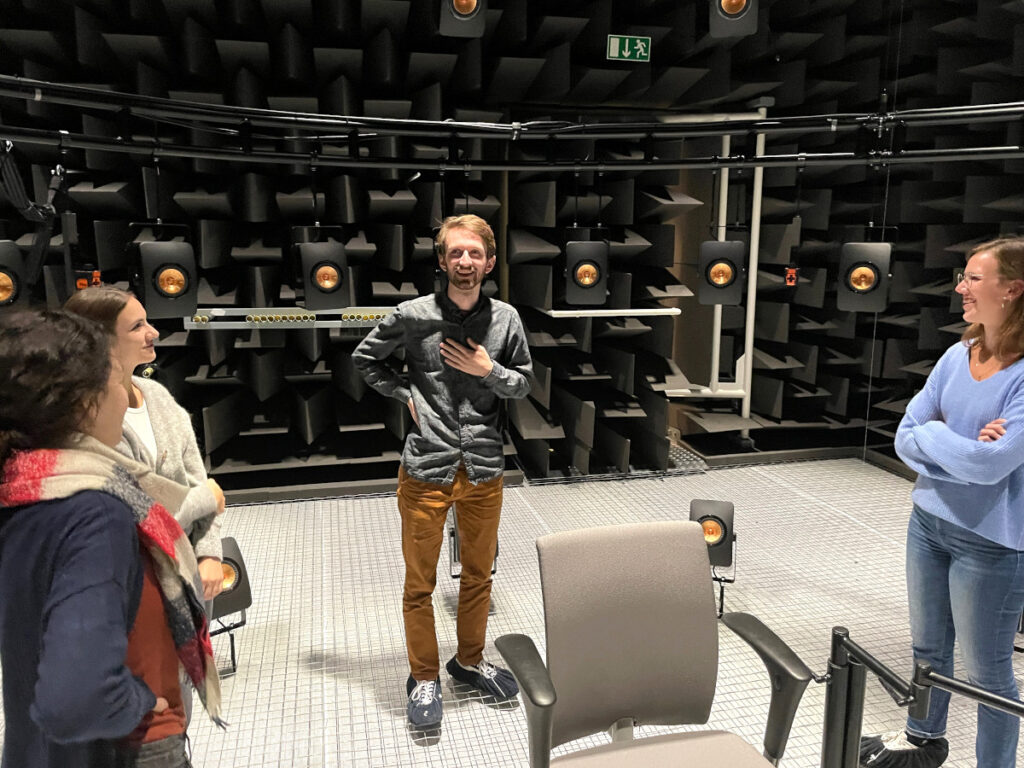
After arrival, check-in and a short lunch break on Friday, we immediately set off for our first item on the program: a visit to the Health Tech Hearing Systems Centre at DTU (Danish Technical University). The center is comprised of various departments whose research units [as a part of the research initiative 2008-11] focus on a deeper understanding of the complex human hearing system. The warm welcome by the head of department, Prof. Dr. Torsten Dau, and the study coordinator, Caroline van Oosterhout, was followed by five exciting project presentations by PhD students and postdocs who are researching the latest technical and clinical developments in the field of hearing and speech disorders. We were then given an insight into the Center’s experimental institutions, in particular the two impressive audiovisual immersion laboratories.
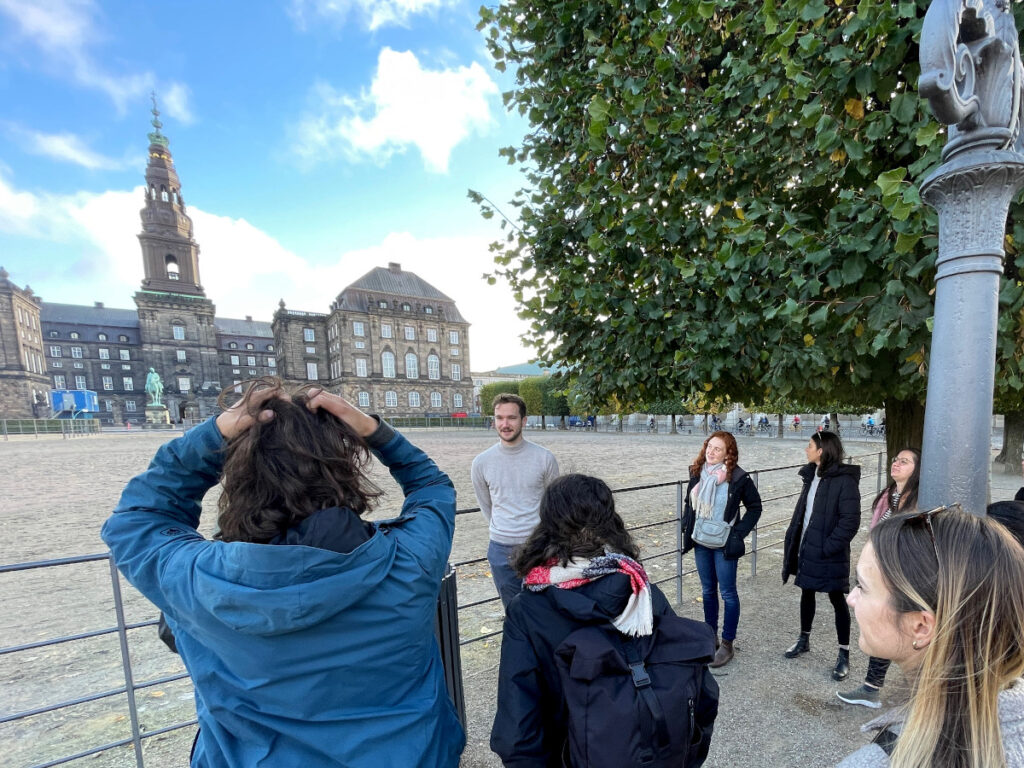
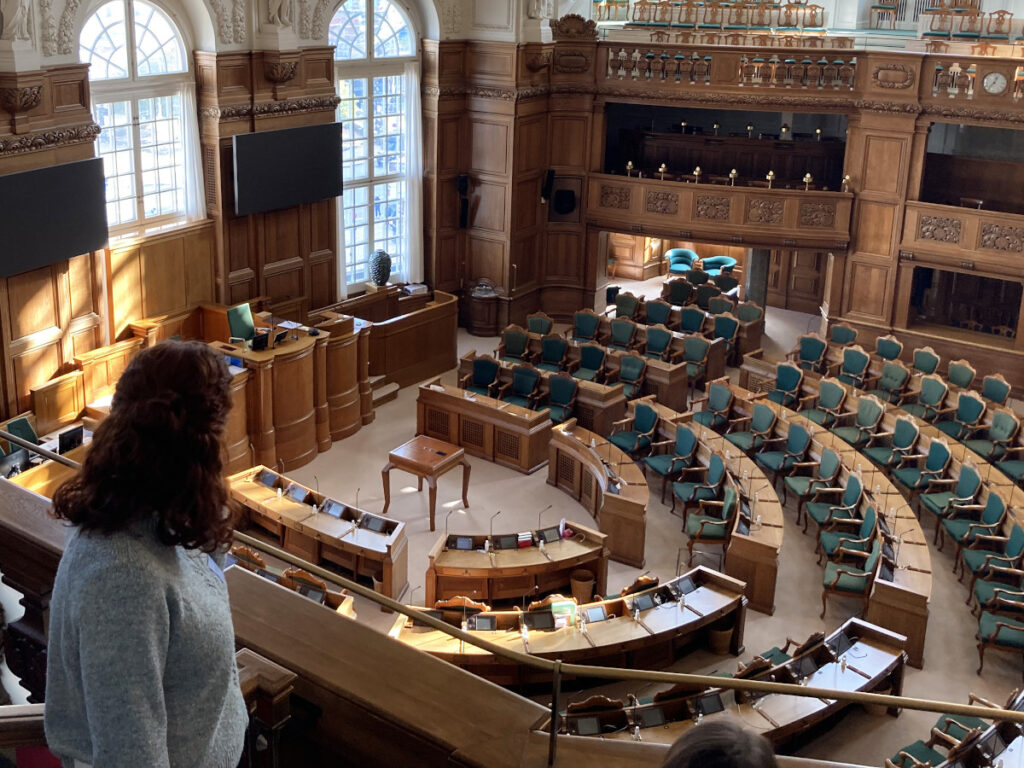
The next day began with a walk to Christiansborg. As we learned from a short presentation by one of our fellows, it is the only building in the world that houses all three branches of government: the Danish Parliament, or Folketing (legislative branch), the Prime Minister’s office (executive branch) and the Supreme Court of Denmark (judicial branch). Fans of the Danish political series “Borgen” were able to recognize the locations of many scenes. During the subsequent guided tour through the interior of the parliament, we had the opportunity to learn more about the development of Danish democracy. As the Folketing had only recently been dissolved due to early elections, we found the rooms of parliament unusually empty and were able to take a comprehensive look behind the scenes of the MPs’ workspace.
In the afternoon, a local architect gave us a guided tour of the Vesterbro harbor district. Once a predominantly private business district with few opportunities for citizens to enjoy the water in fine weather, the harbor district is now considered a landmark of Copenhagen’s sustainable urban planning. Designed by a group of architects in 2013, the Kalvebod Bølge project consists of several wave-shaped jetties, floating platforms, and small wooden bridges that stretch along the entire waterfront, creating new public spaces for walking, relaxing or practicing various water sports.
From Vesterbro, we made our way to the next stop on our day’s program and probably one of Copenhagen’s most visited tourist attractions: the Free City of Christiania. The community was founded in 1971 as an alternative housing estate by squatters protesting against high unemployment and the lack of affordable housing in the city center. Christiania is located on a 34-hectare former military base in the Christianshavn district and today has just under 1000 residents. One of these residents was our hostess, who has lived there herself for 24 years and explained some of the successes, but also the current challenges of the community before taking us on a tour of the city.
On Sunday morning we visited Danmarks Radio (DR), the Danish public broadcaster founded in 1925. The DR complex covers an area of 124,000 m² and consists of four transparent, seven-storey buildings connected by glass-paned corridors. In addition to visiting various production rooms where news programs, talk shows, and series are filmed, we also had the opportunity to play host and audience for a few minutes on the set of a famous Danish late-night show. Entering the mighty newsroom, we were surprised to see many journalists working at their desks even on the weekends. The effects of the upcoming Danish parliamentary elections were once again on display. So we quietly left the open-plan office and made our way to the Koncerthuset. At the end of our tour, we were able to visit the impressive concert hall of the Danish Broadcasting Corporation, designed by French architect Jean Nouvel and opened in 2009 with 1800 seats.
As the rest of the day’s program was open to everyone, we split up into smaller groups after a short coffee and ice cream break. For some, it was high time to pay a visit to the famous Little Mermaid, inspired by the Danish poet Hans Christian Andersen’s fairy tale with the same name. Other sights along the way, just north of Copenhagen, include the star-shaped fortress walls dating back to 1662 and the fortress itself, the Kastellet. Thanks to the Öresund Bridge – the longest bridge in Europe carrying road and rail traffic – Malmö is only a stone’s throw away from Copenhagen. So some of the group decided to take the half-hour train ride and spend a few hours in the neighboring Swedish city. Those of us who opted to stay in the city center had a variety of museums and art galleries to choose from. Some chose to visit the Ny Carlsberg Glyptotek, which is best known for its collection of ancient Greek and Roman sculptures, but also for its extensive collection of Danish works from the 19th and 20th centuries. In addition, the Glyptotek also houses many sculptures by the French sculptor Augustin Rodin, of which “The Thinker” is probably the most famous. The old and new wings of the museum are connected by a beautiful conservatory with a glass dome, which houses a café and is surrounded by more marble statues and palm trees.
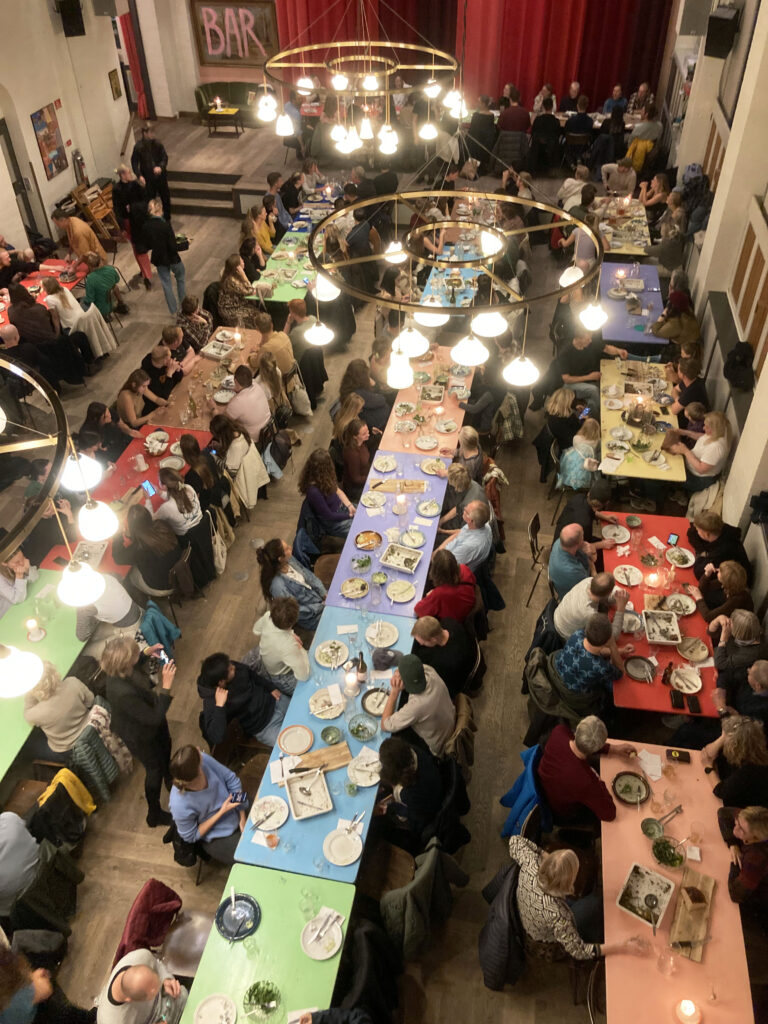
On the occasion of the architecture festival that took place during the week of our stay in Copenhagen, the rest of us decided to visit the Danish Architecture Center. The DAC has been showcasing the latest trends in innovation and sustainability in architecture since 1985 and offers both educational opportunities for professionals and cultural activities open to all. The central exhibition at the time of our visit was titled “Women in Architecture” and paid tribute to the – often overlooked or downright forgotten – works of female architects from the 19th century to the present day. In addition, a series of video interviews highlighted the experiences of contemporary Danish female architects in terms of equality and visibility within the industry. Our last evening in Copenhagen was spent at Folkehuset Absalon, a cultural community center that opened in 2015 in a former church building in the Vesterbro district. In addition to numerous events such as yoga classes, table tennis tournaments, and music concerts, the center offers its visitors the opportunity to meet and get to know new people over dinner.
On Monday morning, after breakfast together and a last walk through the nearby Copenhagen parks, it was time to leave. Inspired and full of energy, we returned to Mainz and would like to thank all fellows of the Gutenberg Academy Fellows Program for making this wonderful experience possible!
At the beginning of November 2021 – and therefore a year later than originally planned due to corona – the study trip to Leipzig was on the agenda for 9 junior fellows. This was used to gain a wide range of insights into the history of the city and to exchange ideas with local doctoral students.
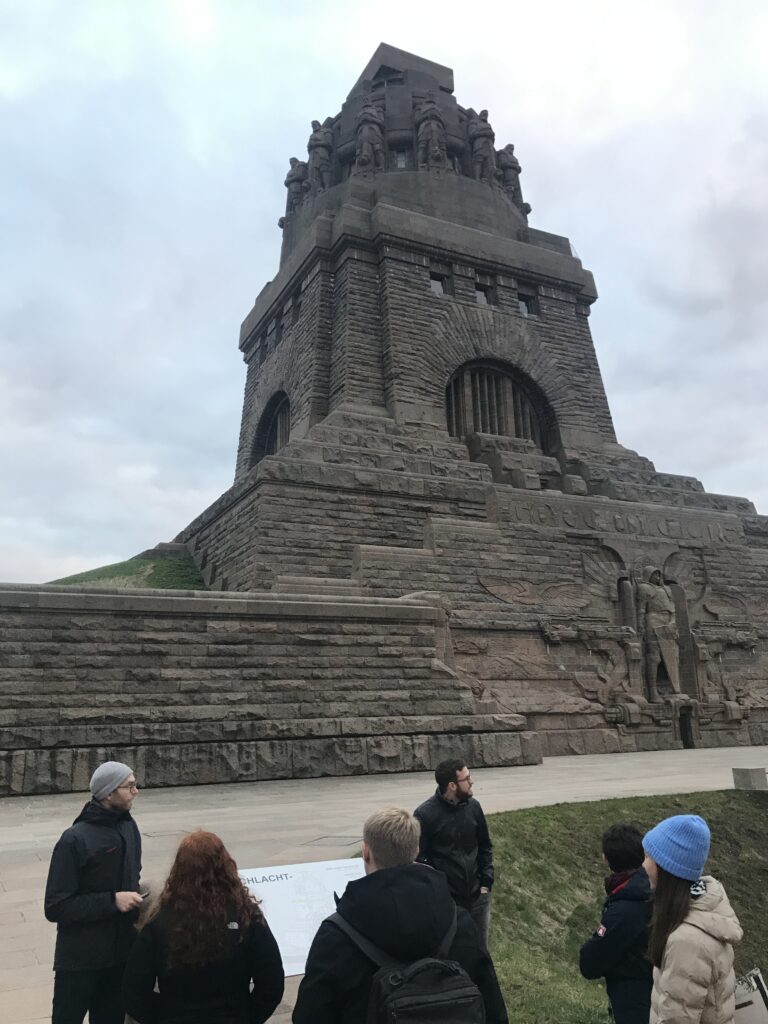
Immediately after our arrival on the afternoon of November 8th, we headed to the Monument to the Battle of the Nations, whose significance and history of its construction were presented to us in short presentations from our own ranks. The following day, we headed for the city center and traveled a few years further into the past of the important trade fair city by paying a detailed visit to the Bach Museum, where we were introduced to the life and work of the famous composer in pictures, sound, and writing. Of course, we couldn’t leave out the St. Thomas Church – Bach’s central place of work – which is located directly opposite.
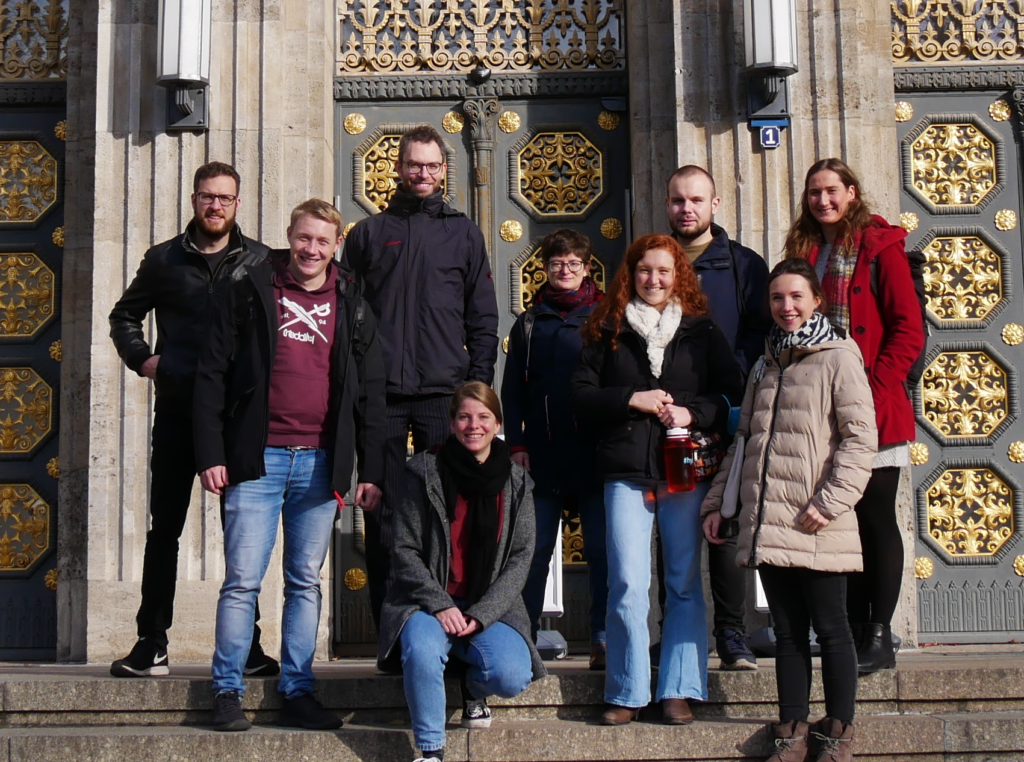
In the subsequent city tour, however, the focus was entirely on the more recent past: The group was taken to important sites relating to the last weeks of the GDR, in particular the “Peaceful Revolution.” The tour started at the Nikolaikirche, the starting point of the Monday demonstrations of 1989, the origins and course of which were described to us in impressive detail. Following the events chronologically, we visited the relevant locations that became the scene of important events during the ever-growing popular protests, which ultimately made reunification possible. An intensive second day was rounded off with a visit to the Albertina university library and its current exhibition “Translated Religions. In the Thicket of True Words.”
On Wednesday, we were given a guided tour of the German National Library, which gave us an insight into the background to its foundation and its history since 1913. In particular, the scope and nature of the work there made it clear what new challenges the last few decades have brought and how these have affected the development of the institution to this day. An exhibition on translations and the Museum of Books and Writing also provided a deeper insight into DNB topics. The special exhibition “Troublemakers. Arts, Protest and the End of the GDR” also offered the opportunity to get closer to East German history and its extremely active and disruptive art and cultural scene.
This was followed by a visit to the “Runde Ecke” memorial museum, which complemented the impressions of the previous day’s city tour and the special exhibition. Welcomed with the remark that the museum is a “journey through time” in every respect, we were not only able to learn about the daily practice at the Leipzig headquarters of the Ministry of State Security, but also get to know an exhibition that is of historical value in itself and which was significantly influenced by the Citizens’ Committee for the Dissolution of the Former Stasi, founded after the fall of the Berlin Wall. The exhibition not only shows the ways and means of espionage and pressure used by the Stasi against its own population, but also how effective the destruction of files was, which has inhibited the ability to come to terms with the past and made it considerably more difficult. For many, experiencing the East German past in the places where it happened was an impressive experience.
At the end of the day, an exchange with the members of the Leipzig University Doctoral Council was also planned for the evening. In particular, due to the current considerations to institution such a doctoral council at JGU Mainz, an exchange about the organization of the council in Leipzig offered itself as a point of comparison. This is a student, interdepartmental body of doctoral students who, among other things, have a say in current issues in university operations, represent the interests of doctoral students, and also create opportunities for networking within the university. Finally, we were given a tour of the Augusteum, the new main university building on Augustusplatz, which was inaugurated in 2012 and whose modern façade matches that of the adjacent Paulinum (auditorium and university church). Elements of the Paulinerkirche, which was blown up in 1968, were integrated into the façade as a reminder. The square and the building had already been the subject of the guided tour on the peace movement of 1989 and so the link to the previous day was drawn once again.
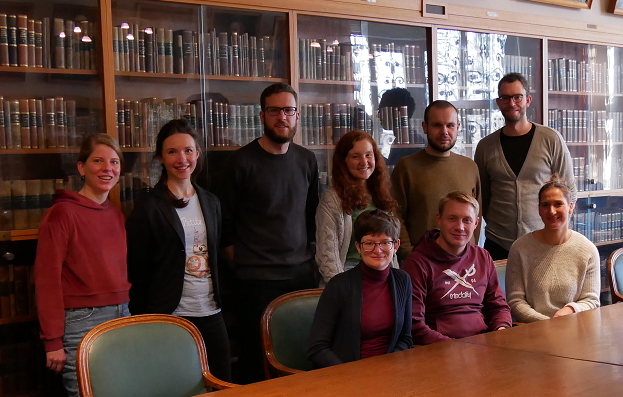
Shortly before our journey home on Thursday, we took a look at the famous Leipzig Gewandhaus and took advantage of the glorious weather to view the entire city and the surrounding area from the roof of the City Tower and bid farewell to the multifaceted city of Leipzig with this impression. The Gutenberg Academy Fellows Program would like to thank all participants for making this valuable and wonderful experience possible – which proved that it is also possible to find worthwhile destinations for a study trip in Germany!
Athens 2014


